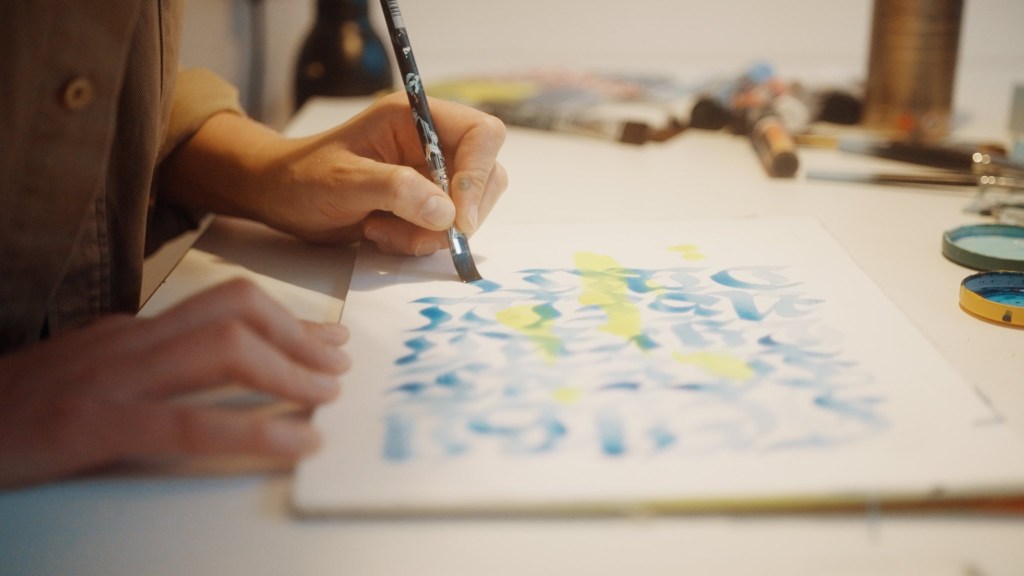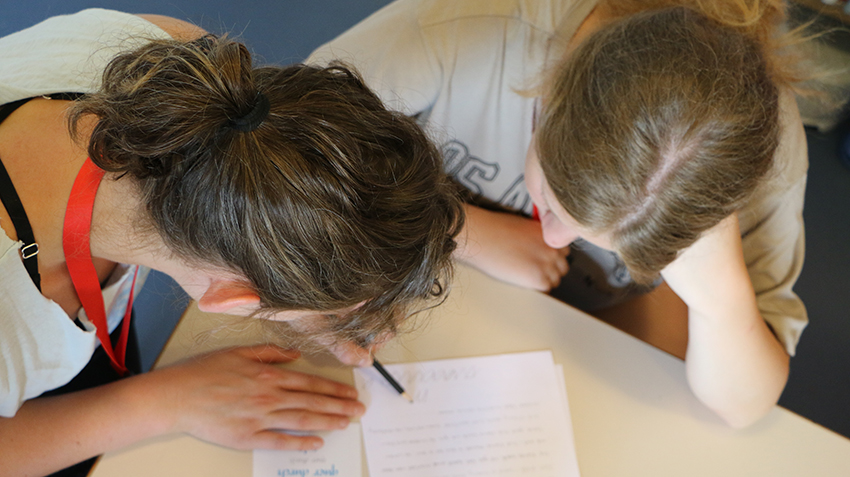
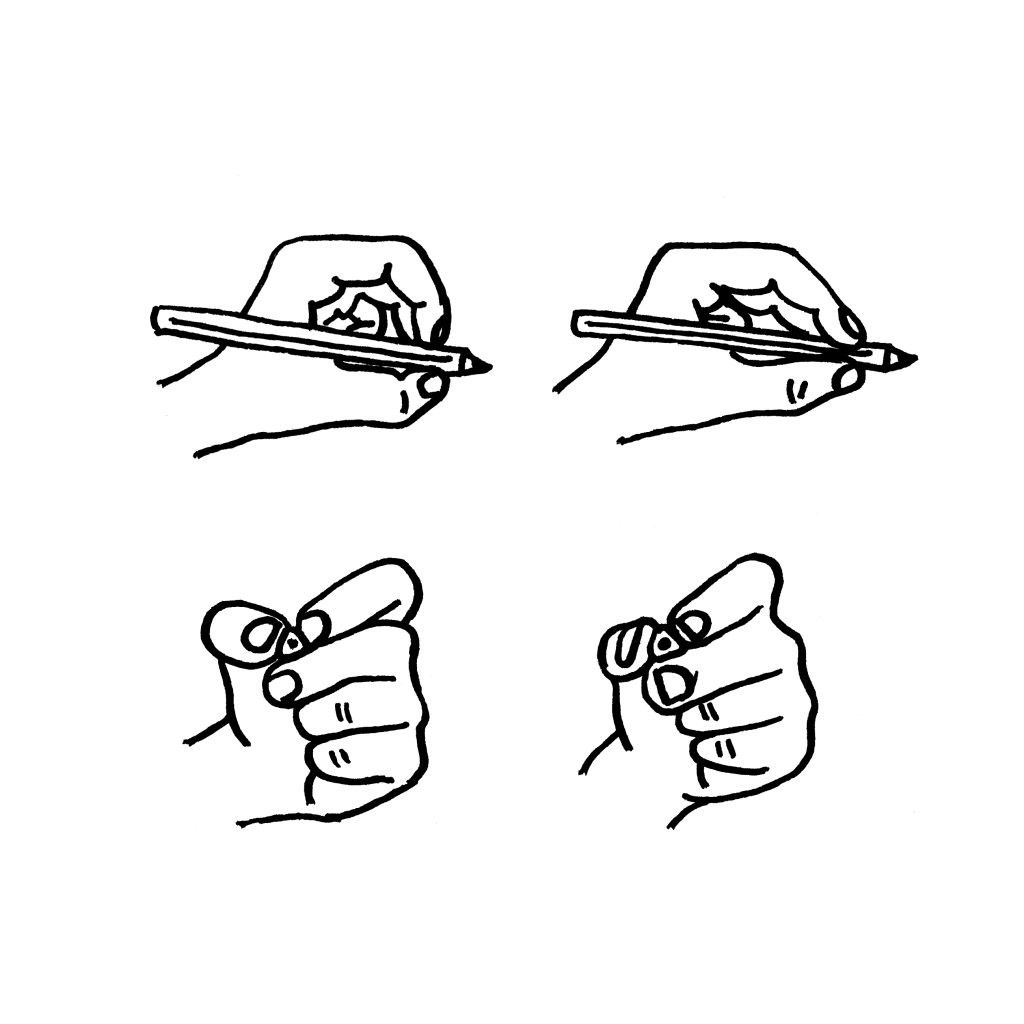
 Das Schreiben mit Bleistift, Füller, Pinsel oder Feder ist Teil der menschlichen Kultur, auch wenn es sich verändert. In der Schule gehört das Schreiben mit der Hand mit zu den Grundvoraussetzungen für eigenständiges Lernen. Einige habe dabei Schwierigkeiten, bei denen ich unterstütze. Andere wollen die Welt der Buchstaben und Zeichen für sich neu oder spielerisch entdecken, z.B. in der Kalligrafie oder im Lettering.
Im Einzeltraining gehe ich ganz individuell auf die Wünsche und Nöte meiner Trainees ein. Die Themen sind dabei so vielfältig wie die Menschen selbst! Im Juli 2025 bin ich nach Hannover (List) gezogen.
 Writing with a pencil, fountain pen, brush or pen is part of human culture, even if it is changing. At school, writing by hand is one of the basic requirements for independent learning. Some have difficulties with this, which I support. Others want to discover the world of letters and writing for themselves in a new or playful way, e.g. in calligraphy or lettering.
I offer one-on-one training, where I respond individually to the wishes and needs of my trainees. The topics are as varied as the people themselves!
Einzeltraining: Zeit, Preis, Kontakt, Ort
• 60 Minuten / Einzeltraining
• i.d.R. Mittwoch nachmittags ab 16:30 Uhr
• Preis- und Terminauskunft auf Anfrage unter hey[ä]scriptmar.com
• Atelier in privaten Räumen (Ortsauskunft dann per E-Mail)
• Austausch per E-Mail, um herauszufinden, wie ich unterstützen kann und ob ihr euch bestimmtes Material und Schreibwerkzeug wünscht. Wenn ihr möchtet, können wir auch kurz telefonieren.
• 60 Minutes / one-on-one training
• usually every other wednesday starting 4:30 p.m.
• pricing and appointments via hey[ä]scriptmar.com
• Atelier in my private premise (directory via E-Mail)
• Exchange by e-mail to find out how I can support you and whether you would like certain material and writing tools. If you like, we can also talk briefly on the phone.
Für Links- und Rechtshändige
Ich selbst bin linkshändig und habe mit links schreiben gelernt. Über eine Fortbildung zur Händigkeitstester*in habe ich mich mit der neuronalen, motorischen und psychischen Entwicklung insbesondere von angeboren Linkshändigen beschäftigt, die mit rechts schreiben lernen.
Parallel habe ich mich auf Grafomotorik-Training für Rechts- und Linkshändige spezialisiert.
Die Fortbildungen zur Händigkeitstester*in und Grafomotorik-Trainer*in habe ich bei Dipl. Päd. Judith Bremer absolviert.
In den letzten Jahren seit 2016 habe ich (z.T. intensiv) Rechtshändige ebenso im Einzel- und Gruppentraining begleitet — ob Handschrift, Kalligrafie, Lettering oder ergonomische Schreibanleitung.
I am left-handed myself and learned to write with my left hand. During my training as a tester for handedness, I studied the neuronal, motorical and psychological development of congenital left-handers, who learn to write with their right hand.
At the same time, I specialized in graphomotoric skills training for right- and left-handers.
I completed further training as a tester of handedness and graphomotoric skills trainer with my instructor Dipl. Päd. Judith Bremer.
In the last few years since 2016, I have also accompanied (sometimes intensively) right-handed people in individual and group training — whether with handwriting, calligraphy, lettering or ergonomic writing instructions.
Für Kinder, Jugendliche und Erwachsene
Als junge erwachsene Person habe ich eine JULEIKA (Jugendleiter*innen-Karte) gemacht und mich in einem Pfadfinder*innen-Stamm in Kiel-Kronshagen engagiert. Die Arbeit mit Kindern und Jugendlichen liegt mir schon immer besonders am Herzen.
Seitdem ich meine Fortbildung zur Händigkeitstester*in im Jahr 2021 absolviert habe, habe ich in Kiel insbesondere an der Förde-VHS einige Kinder-Gruppen geleitet und in meinem Atelier zahlreiche Einzeltrainings und Schreibhandwechsel angeleitet. Die Arbeit mit Kindern macht mir unglaublich Spaß — und bisher habe ich die Erfahrung gemacht, dass dies auf Gegenseitigkeit beruht.
Das Gleiche gilt auch für Erwachsene, die ich z.T. über mehrere Jahre mit ihren verschiedenen Anliegen begleitet habe.
As a young adult, I completed a JULEIKA (german course card for youth group leaders) and got involved in a scout troop in Kiel-Kronshagen. Working with children and young people has always been particularly close to my heart.
Since completing my further training as a tester for handedness in 2021, I have led several children’s groups in Kiel, especially at the Förde-VHS (town’s education center), and have led numerous individual training sessions in my studio. I really enjoy working with children — and so far I have heard that the feeling is mutual.
The same applies to adults, some of whom I have accompanied for several years with their various concerns.
BIPoC- und Queer-freundlicher Space | leider nicht barrierearm
• Ich begrüße insbesondere auch BIPoC und queere Menschen (also LSBTIQA*) sowie andere marginalisierte Gruppen in meinem Einzeltraining.
• Das Einzeltraining ist auch auf Englisch möglich.
• Leider liegen meine Räumlichkeiten im 4. Stockwerk und sind deshalb für manche Menschen nicht / nicht leicht erreichbar. Ich biete an, dann das Einzeltraining bei euch Zuhause durchzuführen.
• I especially welcome BIPoC and queer people (LGBTQIA+) as well as other marginalized groups in my one-on-one training.
• Individual training is also available in English.
• Unfortunately, my premises are on the 4th floor and are therefore not / not easily accessible for some people. I offer to conduct the individual training at your home.
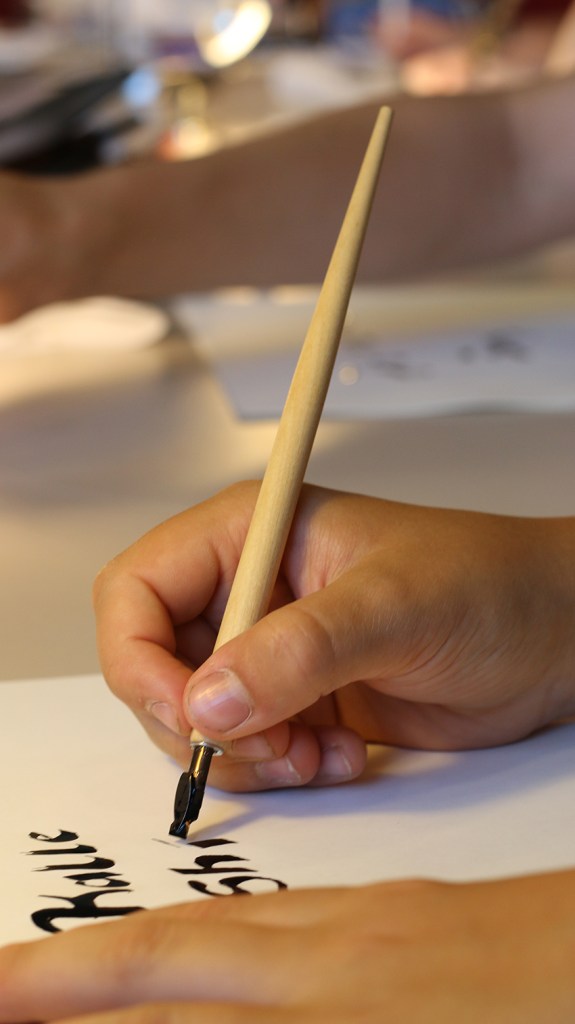
Handschrift- / Kalligrafie- / Lettering- / Unterschrift-Training
Das ruhige Üben des handschriftlichen oder kalligrafischen Schreibens hat auf viele Trainees eine meditative Wirkung und kann Stress entgegenwirken. Und es hilft nicht nur bei der Entwicklung eines Hobbys sondern auch bei der Entwicklung der Persönlichkeit — wie das Unterschrift-Training.
Besonders schön ist es, wenn die Trainees nach ein paar Einzeltrainings erzählen, dass es »klick« gemacht hat. Durch verschiedene, häufig handschriftliche und kalligrafische Methoden erarbeite ich mit euch Wege, um den Einstieg für das selbstständige Schreiben zuhause so einfach wie möglich zu machen. Mir ist es ein großes Anliegen, dass ihr eure ganz eigene Schreiblust und Experimentierfreude entwickelt!
Dabei gebe ich nach Wunsch Impulse über klassische Kalligrafie-Beispiele, die europäische Schriftgeschichte oder verschiedene Materialien und Werkzeuge.
Dieses Training ist für Links- und Rechtshändige gedacht.
Nochmal ganz konkret …
Bei eurer Handschrift kann es um Leserlichkeit gehen oder um die Veränderung einzelner Zeichen hin zu einer schöneren, fließenderen Handschrift. In meiner theoretischen und praktischen Auseinandersetzung in und nach meinem Studium habe ich herausgefunden, wie die Schulschriften funktionieren und was wir auch noch im Laufe eines Lebens individuell anpassen können.
Die Unterschrift ist ein unterschätztes, vermeintliches Detail, das aus den Eigenheiten der Handschrift entstehen soll und ein Wiedererkennungszeichen bildet. Besonders im Management, der Juristik oder im medizinischen Kontext hat die Unterschrift (und z.B. das sog. Ärzt*innen-Kürzel) starke Aussagekraft.
In der klassischen Kalligrafie biete ich Training für lateinische, also europäische Schriften an, insbesondere die humanistischen Schriften (Antiqua und Kursive) und die gebrochenen Schriften (Textura, Bastarden, wie z.B. Fraktur). Dabei ist dem Schriften-Repertoire keine Grenzen gesetzt. Ich habe zwischen 2016 und 2024 europäische Schriftgeschichte und Kalligrafie-Unterricht im Bereich Font-Design an der Muthesius Kunsthochschule in Kiel unterrichtet sowie zahlreiche Workshops an verschiedenen Orten gegeben. Sagt mir gern, was euch genau interessiert und ich bereite es vor! Wir schreiben mit Breitfeder und Tusche, also gern Kleidung tragen, die Flecken verträgt.
Die experimentelle Kalligrafie ist für mich ein Ausprobieren auf Grundlage der klassischen Kalligrafie vor allem in Kombination mit anderen Disziplinen, wie z.B. dem Graffiti. So entstand für mich eine langjährige Auseinandersetzung mit dem Arbeiten im Calligraffiti mit Markern, Dosen und anderen Werkzeugen aus dem Streetart (siehe hierzu unter »Shop« die Serie »diaries«).
Brush- und Hand-Lettering haben in den letzten Jahren hohe Popularität gewonnen. Für manche Menschen macht es mehr Spaß, Buchstaben zu zeichnen (Hand-Lettering) und die (anfängliche) Strenge der klassischen Kalligrafie mit anderen Werkzeugen zu durchbrechen. Im Brush-Lettering wird mit einem Brush-Pen geschrieben (hat Ähnlichkeit mit der Spitzfeder-Kalligrafie, ist aber spielerischer) und im Hand-Lettering werden Buchstaben i.d.R. gezeichnet, also z.B. Umrisse nachgezogen und gern farbig ausgefüllt. Beides bringt im Einzeltraining frischen Wind rein und lässt sich schön auch mit Kindern zuhause machen!
The calming practice of handwriting or calligraphy has a meditative effect on many trainees and can counteract stress. And it not only helps with the development of a hobby but also with the development of personality — like the signature training.
It’s particularly nice when trainees say that it had “clicked” after a few individual training sessions. Using various, often handwritten and calligraphic methods, I work with you to find ways to make it as easy as possible for you to start writing independently at home. It is very important to me that you develop your very own desire to write and enjoy experimenting!
If you wish, I will give you ideas about classic calligraphy examples, european writing history or various materials and tools.
This training is intended for left- and right-handed writers.
in more concrete words …
Your handwriting can be about legibility or about changing individual characters to create a more beautiful, flowing handwriting. In my theoretical and practical work during and after my studies, I found out how school scripts work and what we can adapt individually over the course of a lifetime.
The signature is an underestimated, supposed detail that is meant to emerge from the peculiarities of handwriting and form a recognisable mark. Especially in management, law or in a medical context, the signature (and, for example, the so-called doctor’s abbreviation) has strong expressive power.
In classical calligraphy, I offer training in latin, i.e. european scripts — in particular the humanist scripts (Antiqua and Cursive) and the broken scripts / black letter (Textura, Bastardas, such as Fraktur). There are no limits to the font repertoire. Between 2016 and 2024, I taught the history of latin scripts and gave calligraphy lessons in the department of font design at the Muthesius Academy of Fine Arts and Design in Kiel. I was lucky to give numerous workshops at various locations. Let me know what you are interested in and I will prepare it for you! We write with broad nib and ink, so please wear clothes that can take stains.
For me, experimental calligraphy is an experiment based on classical calligraphy in combination with other disciplines such as graffiti. For me, this led to many years of exploring calligraphy with markers, cans and other tools from street art (see the “diaries” series under “Calligraffiti”).
Brush and hand lettering have become very popular in recent years. For some people, it is more fun to draw letters (hand lettering) and to break through the (initial) rigor of classic calligraphy with other tools. In brush lettering, letters are written with a brush pen (similar to pointed pen calligraphy, but more playful) and in hand lettering, letters are usually drawn, e.g. outlines are traced and often filled in with color. Both bring a breath of fresh air to individual training and can also be done at home with children!
Schreibhand-Training: ergonomischeres Schreiben (insbesondere für Schulkinder)
Dieses Training ist sowohl für Rechts- als auch für Linkshändige gedacht, dabei werden Linkshändige dieses Angebot häufiger in Anspruch nehmen.
Denn ohne geeignete Anleitung gewöhnen sich Linkshändige häufig schon im Kindesalter eine verkrampfte Stift- und Handhaltung beim Schreiben an (häufig »Hakenhand«).
In der Schule erlernen sie meist keine ergonomische Handhaltung für die linke Hand. Rechtshändige dagegen i.d.R. schon — aber auch nicht alle. Es geht in diesem Training also um die richtige Haltung beim Schreiben und nicht um das perfekte Ergebnis!
Das Schreibhand-Training ist dafür geeignet, die Schreibhand langfristig und ergonomisch zu trainieren. Linkshändige können es auch direkt an den Schreibhandwechsel anschließen.
This training is intended for both right- and left-handers, although left-handers are more likely to take advantage of this offer.
Without suitable guidance, left-handers often get used to a cramped pen and hand position when writing (often referred to as “hook hand”) as early as childhood.
At school, they usually do not learn an ergonomic hand position for the left hand. Right-handers, on the other hand, usually do — but not all of them. This training is therefore about the correct posture when writing and not about the perfect result!
Training the writing hand is suitable for long-term and ergonomic training of the writing hand. Left-handers can also do it directly after changing their writing hand to the left (when writing learned with the right hand).
Schreibhandwechsel für Linkshändige, die mit rechts schreiben gelernt haben (oder gerade lernen)
Kinder und Erwachsene, bei denen die Händigkeitstestung eine unerkannte Linkshändigkeit gezeigt hat, können im scriptmar einen Schreibhandwechsel nach links machen.
Der Schreibhandwechsel wird in dem einstündigen Einzeltraining angeleitet — und bildet die Grundlage für die weitere Arbeit zuhause. Wichtig zu wissen: der tatsächliche und vollständige Wechsel der Schreibhand dauert i.d.R. mehrere Monate. Wichtig ist, dass Eltern bei linkshändigen Kindern dann deutlich und langfristig am Ball bleiben.
Auf Wunsch können wir individuell Folge-Termine in Form von Einzeltraining vereinbaren. Bei Kindern empfehle ich mindestens einen weiteren Termin, sodass ich den Prozess im Detail begleiten kann.
Ablauf: Die Trainees beginnen mit Schwungübungen, die täglich durchgeführt werden. Im Wochen-Rhythmus übernehmen sie dann immer mehr kleinere Aufgaben mit links bis hin zum Schreiben. Sitz-, Stift- und Blatthaltung sind dabei unerlässliches Beiwerk zum langfristigen Wohlfühlen beim Schreiben mit der linken Hand.
Im Einzeltraining arbeite ich gezielt mit ausgewählten Schreibwerkzeugen und z.T. kalligrafischen Werkzeugen, um den Trainees ein tiefes Gefühl für Buchstabenformen mit der linken Hand zu vermitteln.
Tipps für Stifte, Füller und Schulzubehör für linkshändige Kinder bekommt ihr beim ersten Termin in Form eines Zettels mit!
Children and adults who’s test result is that they are left-handed, but have learned to write with the right hand, can change their writing hand to the left at scriptmar.
The one-to-one training session provides instruction on how to longterm use your real writing hand — and forms the basis for further work at home. Important to know: the actual and complete training of the left hand to constantly write with usually takes several months. It is important that parents of left-handed children stay on the ball for the long term.
On request, we can arrange individual follow-up appointments in the form of one-to-one training. For children, I recommend at least one further appointment so that I can accompany the process in detail.
Procedure: The trainees start with daily swing exercises. Over the course of weekly exercises, they then take on more and more smaller tasks with the left hand up to writing. Sitting, pen and page posture are essential elements for long-term comfort when writing with the left hand.
In individual training, I work specifically with selected writing tools and sometimes calligraphic tools to give trainees a deep feeling for letter forms with the left hand.
You will receive tips for pens, fountain pens and school accessories for left-handed children in the form of a note at your first appointment!
Beratung rund um das Thema Händigkeit (ob links- oder rechtshändig)
Ich biete keine Händigkeitstestungen mehr an. Bei Bedarf meldet euch bitte bei Dipl. Päd. Judith Bremer.
Händigkeit zu testen bedeutet herauszufinden, ob eine Person angeboren links- oder rechtshändig ist. Diese Dominanz einer Hand hängt mit der Dominanz einer Gehirnhälfte zusammen, die ebenfalls angeboren ist. Bei der Testung werden intuitive Handgriffe herausgefiltert, die Händigkeitstester*innen die Dominanz verraten.
Wird im Laufe des Lebens die nicht-dominante Hand beim Schreiben trainiert, hat dies entsprechend Auswirkungen auf die Entwicklung des Gehirns. Und dies kann schwere Folgen in der persönlichen und physischen Entwicklung haben. Mit einer Testung der Händigkeit kann also einerseits auf die Dominanz einer Hand, aber auch auf die Dominanz einer Gehirnhälfte geschlossen werden. In Fällen, in denen dies unklar oder unsicher ist, ist also eine klärende Testung auch für die gesunde Entwicklung des Gehirns empfehlenswert.
Ihr habt Fragen zum Thema Händigkeit und insbesondere der Linkshändigkeit? Ihr fragt euch, wie Linkshändigkeit gesellschaftlich wahrgenommen wird oder wie es ist, linkshändig in die 1. Klasse zu kommen? Oder wollt ihr mehr dazu wissen, welche Auswirkungen es haben kann, unerkannt linkshändig zu sein und mit rechts schreiben zu lernen? Warum es hemisphären-bedingt keine Beidhändigkeit geben kann?
Häufig tauchen schon vor oder auch erst nach ein paar Tagen nach einer Testung Fragen auf. Ich kann euch bei Unsicherheiten unterstützen und einen Einblick in die Thematik bzw. einen Ausblick z.B. zum Thema Schreibhandwechsel geben.
Ich habe festgestellt, dass es mehr Linkshändige gibt, als statistisch festgeschrieben wurden — und ich habe gelernt, dass die Themen Händigkeit und Schreibenlernen so gut wie jede Person interessiert. Schon oft habe ich gehört »ich kann mit links auch echt viele Sachen, aber ich schreibe mit rechts!« — kommt gern vorbei!
I no longer offer testing for handedness. If required, please contact Dipl. Päd. Judith Bremer.
Testing handedness means finding out whether a person is born left-handed or right-handed. This dominance of one hand is related to the dominance of one side of the brain, which is also innate. During testing, intuitive hand movements are filtered out, which reveal the dominance to the tester.
If the non-dominant hand is trained in writing over the course of a lifetime, this has a corresponding effect on the development of the brain. And this can have serious consequences for personal and physical development. Testing for handedness can therefore indicate the dominance of one hand, but also the dominance of one side of the brain. In cases where this is unclear or uncertain, clarifying testing is therefore also recommended for the healthy development of the brain.
Do you have questions about handedness and left-handedness in particular? Are you wondering how left-handedness is perceived by society or what it’s like to start first grade left-handedly? Or do you want to know more about the effects of being born left-handed and not know at first therefor learning to write with the non-dominant right hand? And why there can’t be ambidexterity due to hemispheric factors?
Questions often arise before or even a few days after a test. I can support you if you are unsure and give you an insight into the topic or an outlook, e.g. on the subject of learning to write with your dominant hand.
I have discovered that there are more left-handers than the statistics say — and I have learned that almost everyone is interested in the topics of handedness and learning to write. I’ve often heard “I can do a lot of things with my left hand, but I write with my right!” — please come by!